01 · now
Try to kill the reference
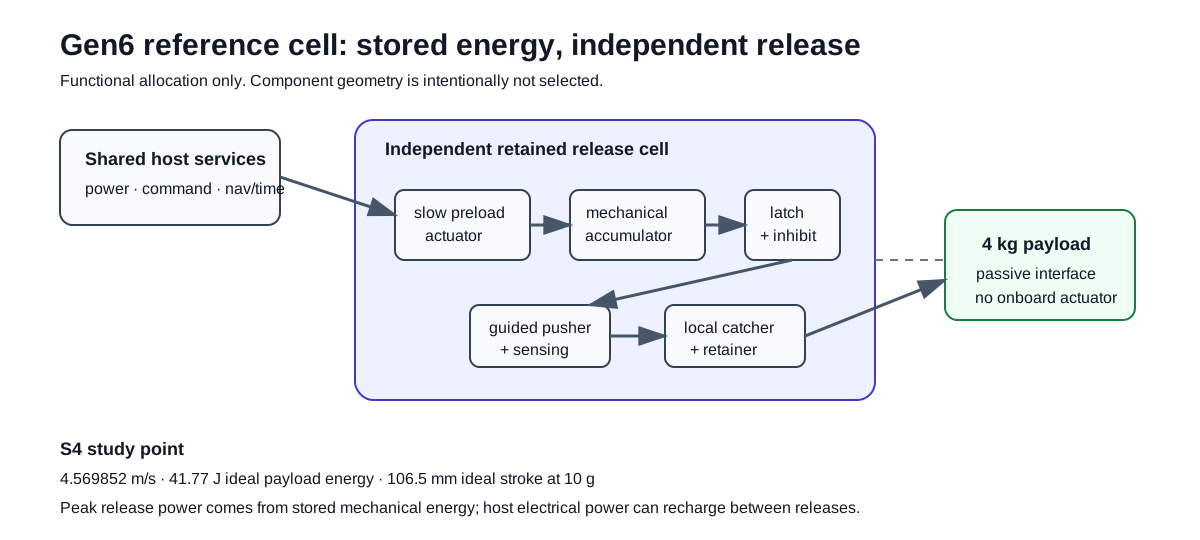
Freeze coupon bands for accumulator force-displacement, preload repeatability, latch shock, pusher friction, exit velocity/tip-off and catcher load before detailed CAD.
02 · burden
Charge every cell for what it needs
Compare independent cells, banks and the shared path using structure, actuators, controls, energy, envelope and failure consequences per successfully delivered payload.
03 · mission
Put the missing physics back in
Add release/navigation uncertainty, clearing/settling time, host attitude recovery and complete-manifest effects where S4 deliberately stopped.
04 · decision
Close P92 or change the machine
The reference survives only if installed burden and release-cell evidence survive their declared bands. A failed band changes the architecture instead of widening the band.
05 · scale
2 / 4 / 12 payload arrangements
Start from the 4 kg 3U reference, then test whether the architecture survives adjacent payload classes instead of enlarging CAD.
06 · build
Make one test article reproducible
Drawings, BOM, assembly/inspection, instrumentation, calibration, uncertainty and frozen acceptance criteria before physical testing.