spacecraft deployment · engineering programme · 2021 → now

Make the release part of the mission.

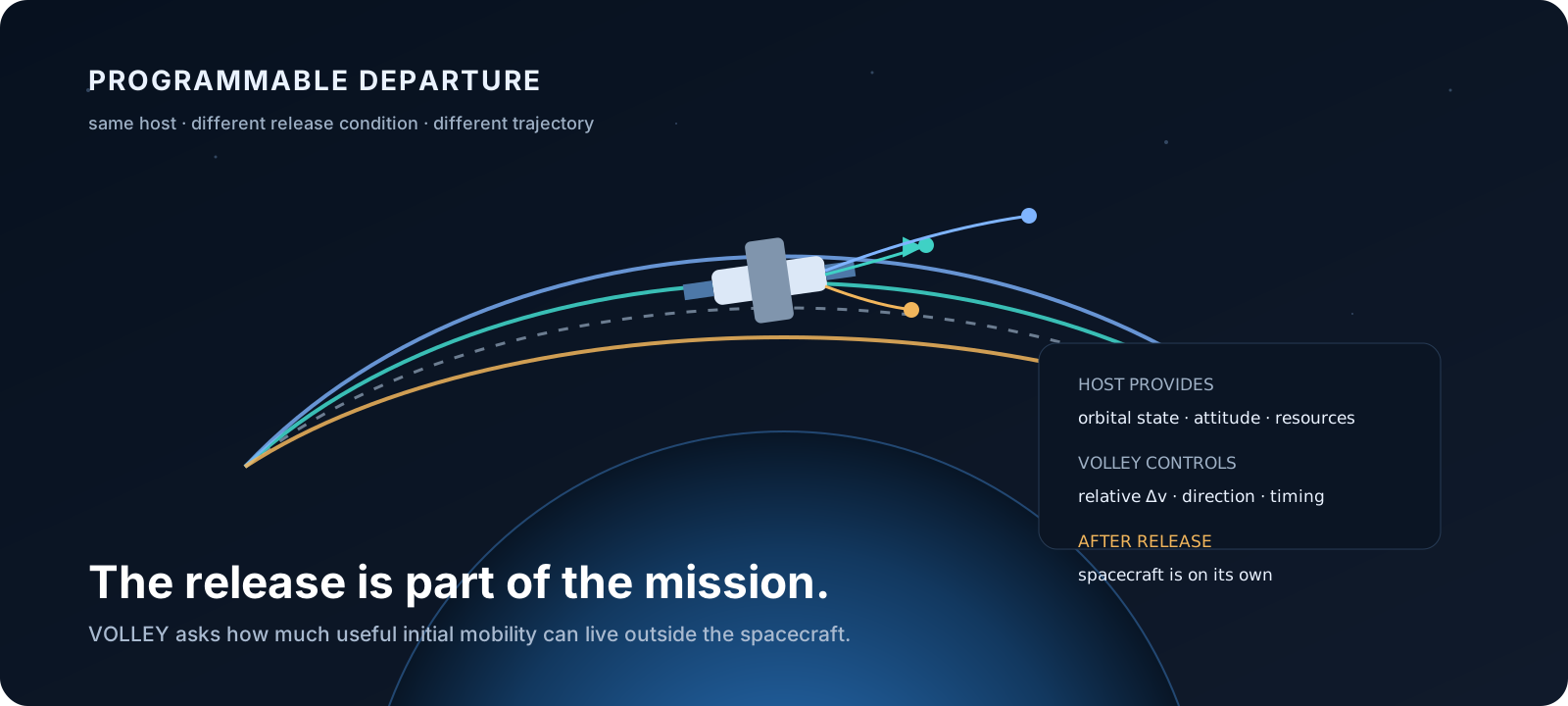
VOLLEY investigates provider-hosted control of individual payload departure conditions: relative velocity, direction and timing supplied at release, before a spacecraft has to carry mobility of its own.

4 kg / 3U referenceGen5 frozen comparatorclean-sheet Gen6 reference selected · P92 opennothing built or measured
VOLLEY departure concept
01 · the job

A deployer is already changing the orbit. The question is whether that change can be useful.

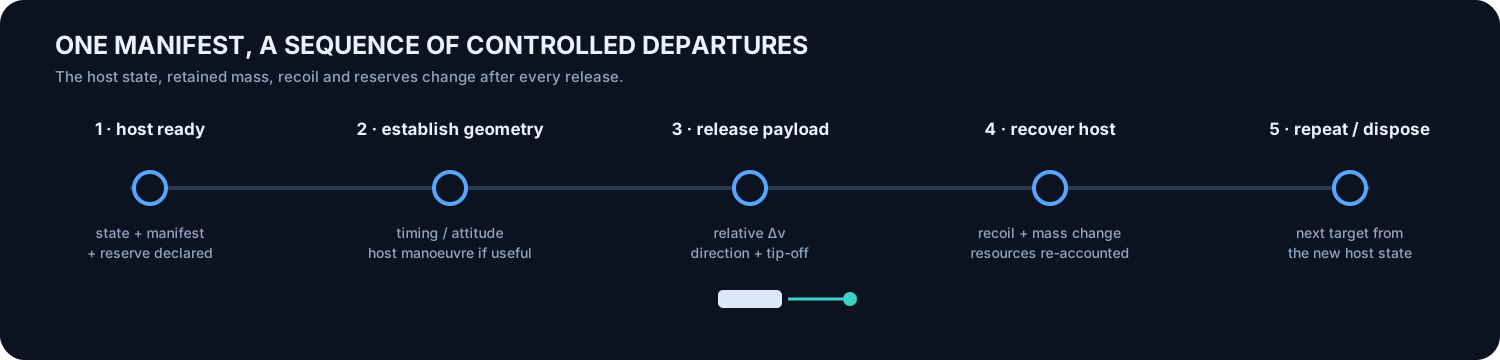
The host owns coarse orbital state and resources. The deployment system owns the relative release condition. The spacecraft owns everything after contact ends. VOLLEY is the trade between those three.

Mission sequence
host

Place and recover

Navigation, attitude authority, permitted manoeuvres, recoil recovery and campaign reserves stay in host accounting.

release

Control the departure

Relative Δv, direction, timing, retention, tip-off and repeatability are the deployment-system job.

spacecraft

Then it is on its own

No continuing stationkeeping, collision avoidance or formation control is implied after separation.

flight context

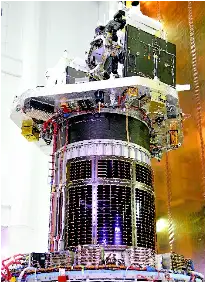
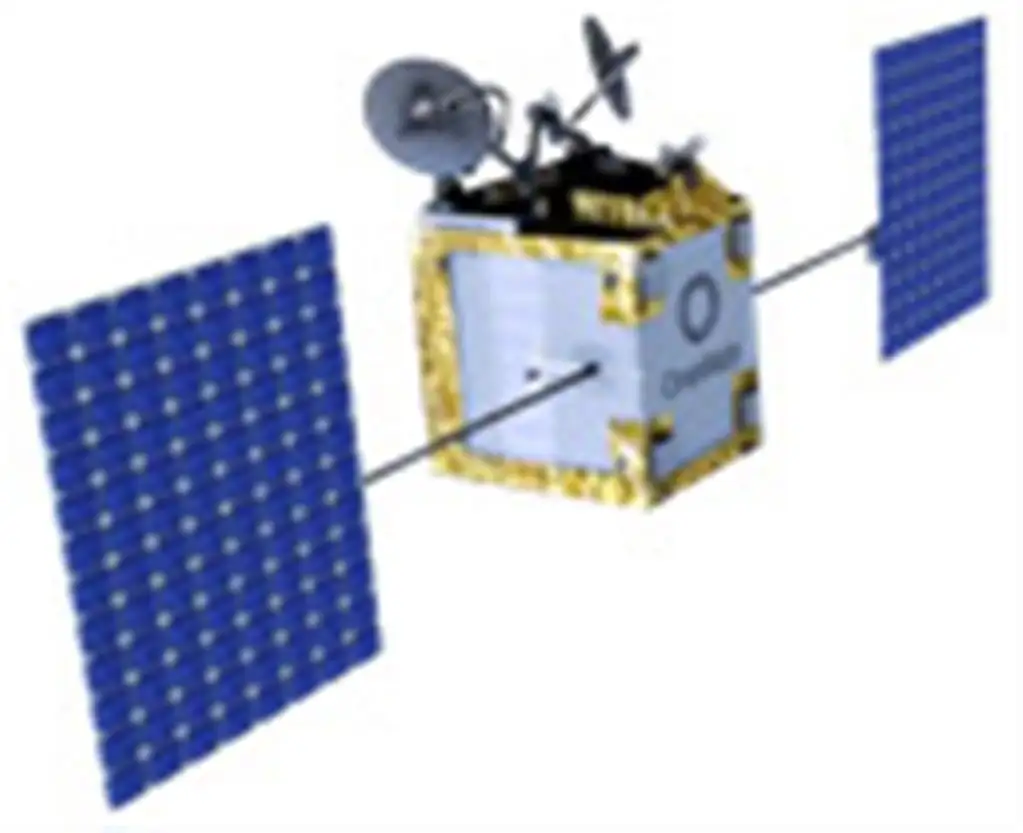
The host-side mission already exists in pieces. VOLLEY asks whether the release can do more.

These are real spacecraft and upper-stage operations, not renders of VOLLEY. They establish useful context for retained orbital platforms and multi-satellite separation campaigns; they do not demonstrate provider compatibility with this project.

02 · the machine

Five years of deleting assumptions.

The mission idea survived. The mechanism did not. S4 has now earned a clean-sheet functional reference, but detailed CAD still has to wait for release-cell falsification and installed-burden evidence.

2021

Coilgun on a free-flyer

The project began by naming the distribution problem. In 2023 the host changed to a spent upper stage; by mid-2025 the coilgun gave way to a linear synchronous motor because commanded velocity, not simply ejection, was the product.

2023 ADR-002

POEM reframed the mission around a retained, controlled upper stage rather than a dedicated free-flyer.

Gen4 CAD
Gen4

Last hand-modelled generation

Detailed Fusion geometry, but no committed STEP export and known disagreement with analysis stations.

9 Fusion documents

More visual detail did not mean more reproducibility. Gen4 is useful history, not a current numerical authority.

Gen5 CAD
Gen5 · frozen

Electromagnetic baseline

Script-built geometry and the manuscript comparator. It is reproducible, heavy, and intentionally frozen with its failures.

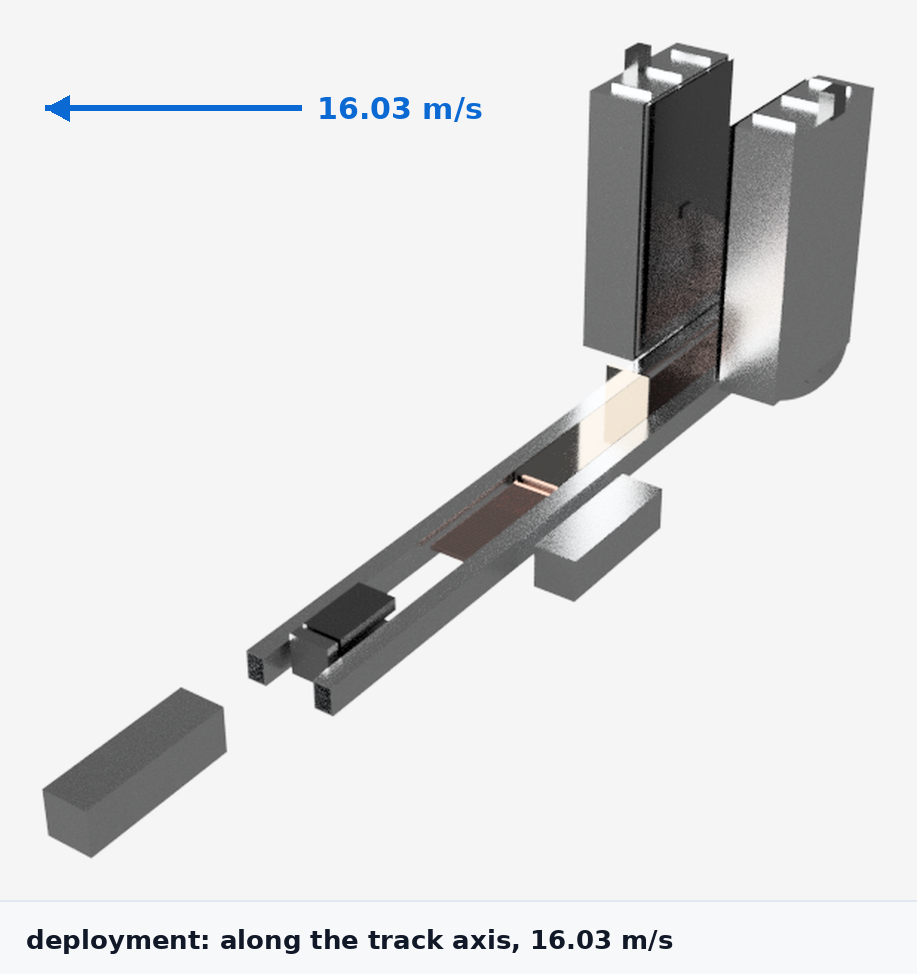
16.029 m/s

Calculated release velocity at the frozen reference point.

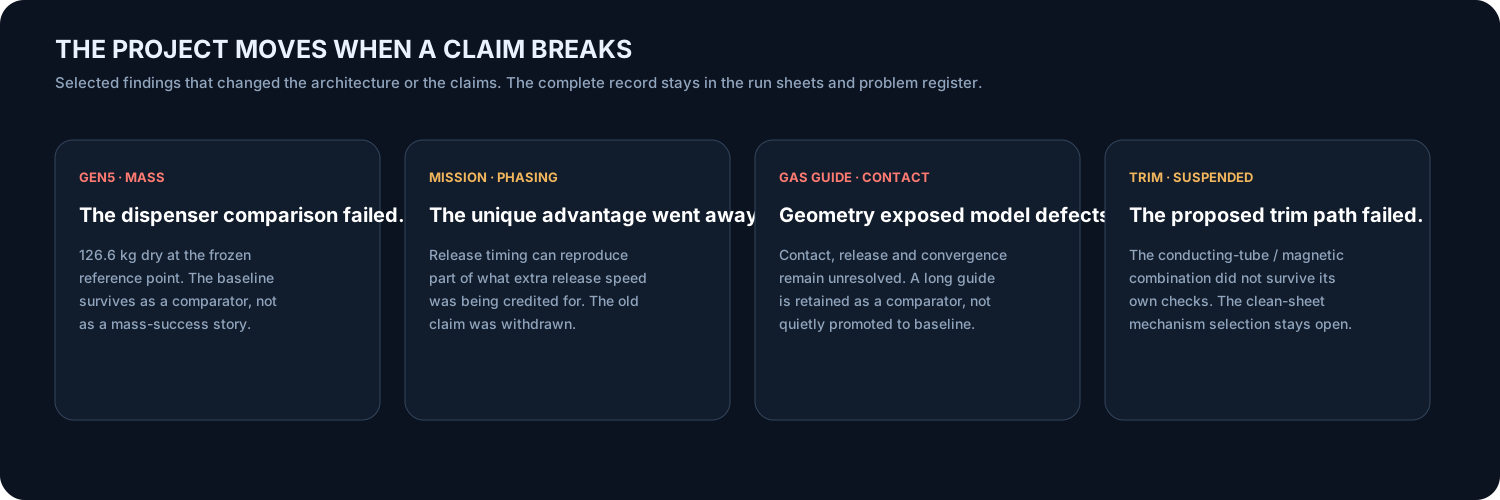
126.6 kg dry

The 3U dispenser mass comparison fails.

10.07 g

Peak acceleration at the frozen model point.

18.8% net

Electrical-to-payload efficiency in the frozen ledger.

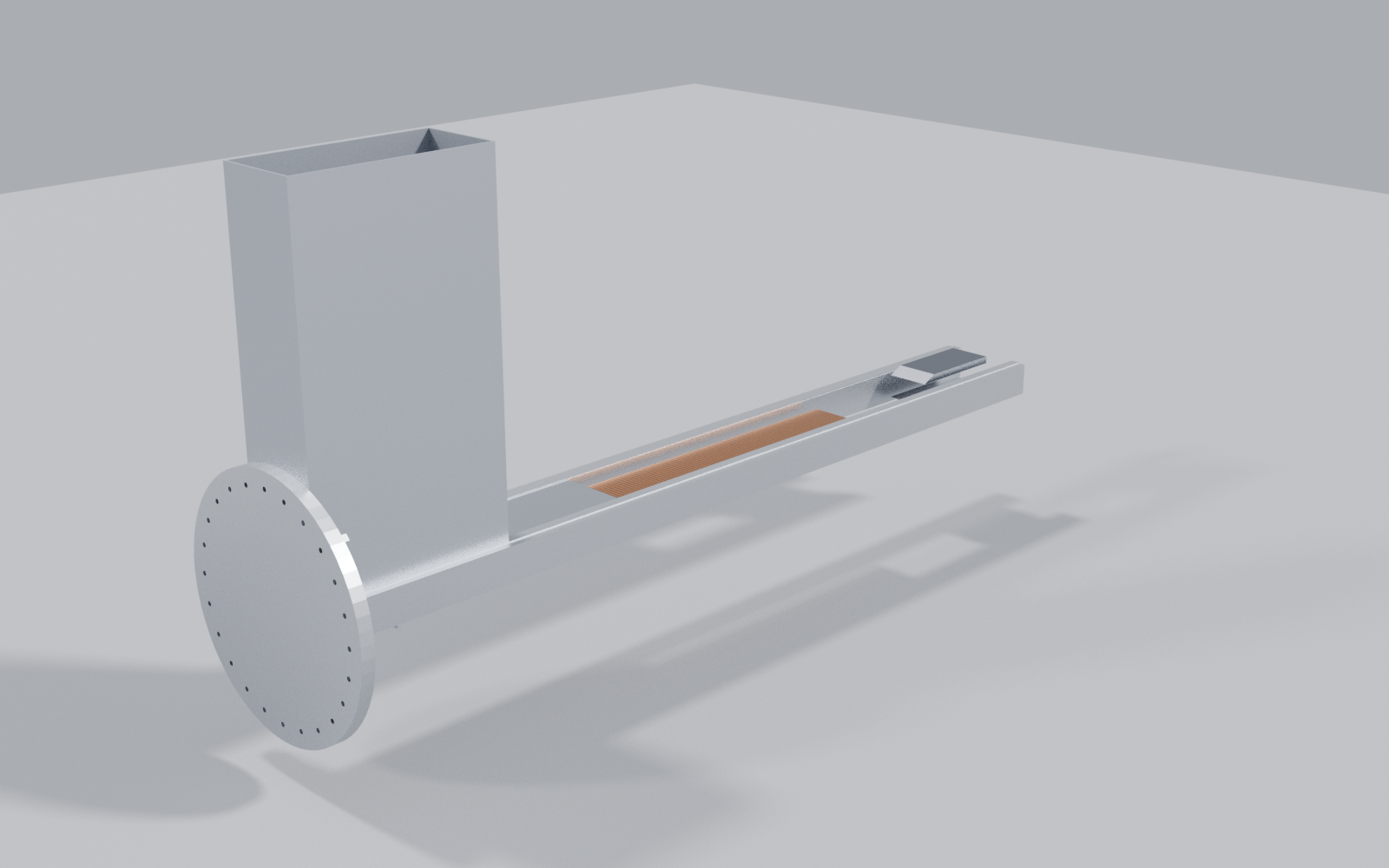
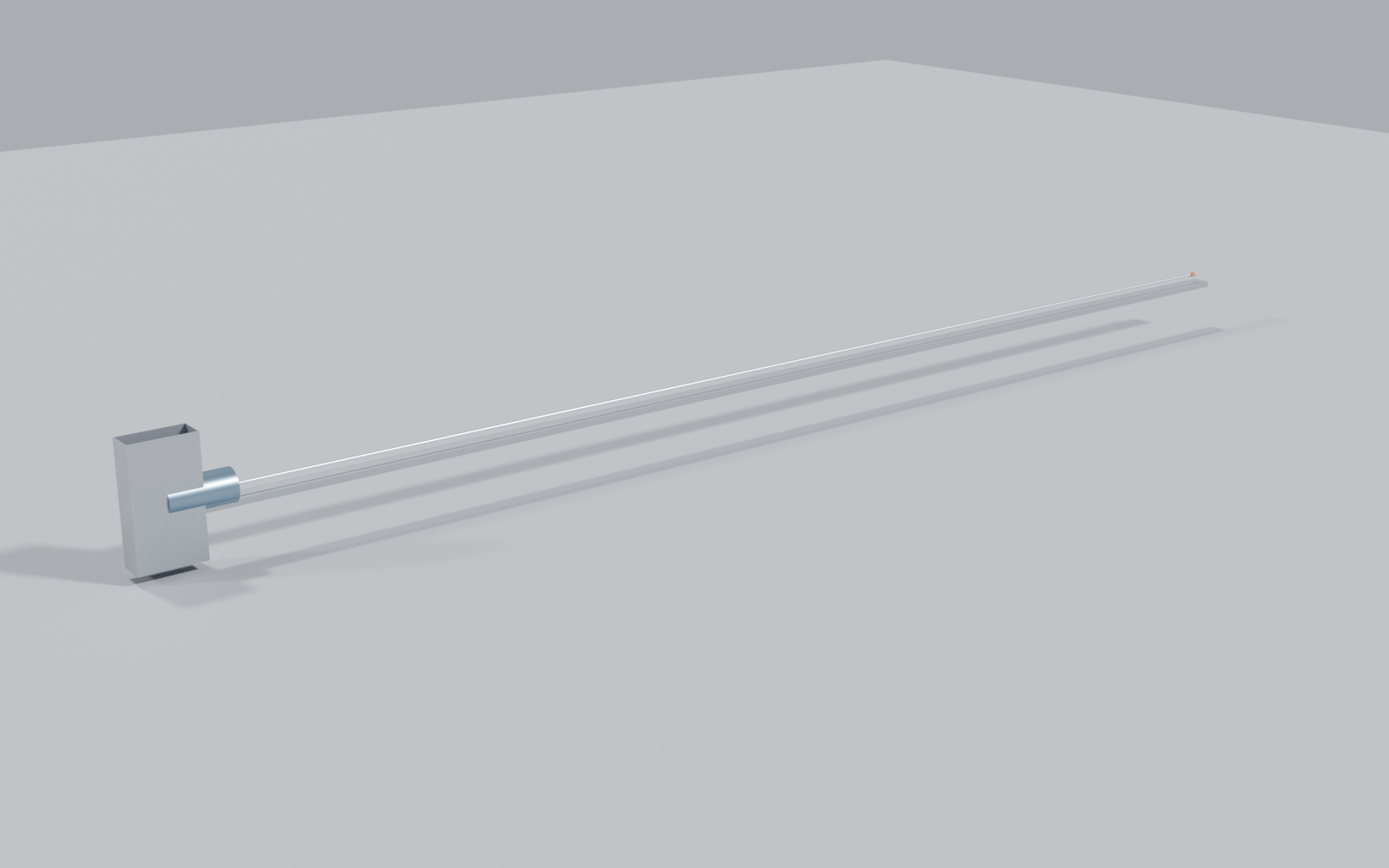
Existing Gen6 gas-guide study
Existing Gen6 · comparator

Stage-integrated gas guide

The stage became part of the machine. Contact/release physics and accommodation remain unresolved; trim is suspended.

≈8 m guide study

A valuable architecture experiment, not the selected clean-sheet reference. Its results and failures remain in the comparison.

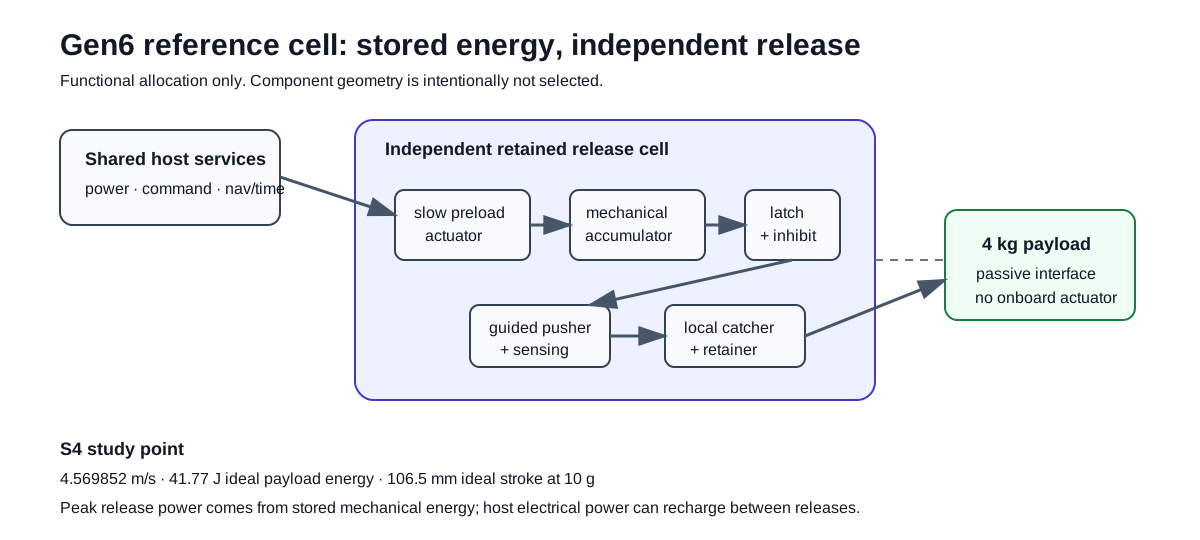
Clean-sheet Gen6 functional reference
clean-sheet reference

Independent retained release cell

Motor-charged mechanical accumulator, independent latch, short guided pusher and local catcher. Functional allocation only; component geometry remains unselected.

41.77 J ideal

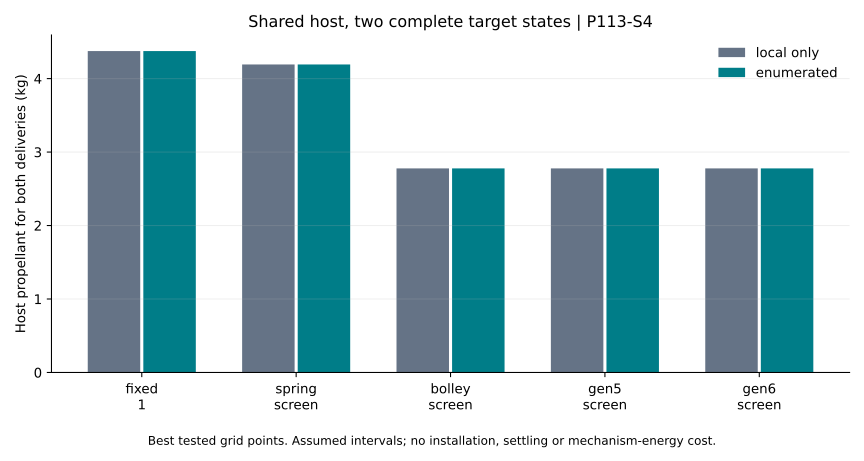
Payload energy at the S4 4.569852 m/s study point for 4 kg.

106.5 mm

Ideal constant-acceleration stroke at 10 g.

1.79 kW

Ideal terminal payload power at 10 g; stored energy avoids making this a host-bus pulse by definition.

OPEN P92

Installed mass, release dynamics, repeatability, catcher loads and provider accommodation can still reject it.

03 · inspect the geometry

Spin the frozen Gen5 model in the browser.

This is the actual committed STL geometry for the frozen comparator, loaded directly from the repository. It is here to inspect an existing machine, not to imply the clean-sheet reference already has detailed geometry.

Static nominal render of the frozen Gen5 electromagnetic comparison assembly

Nominal Gen5 render. Loading the interactive geometry when supported.

Inspect CAD files and provenance
04 · mission sandbox

Change the departure condition and watch what happens.

This browser view is intentionally simple: a 500 km circular host and a tangential release in a two-body model. It is for intuition, not evidence. The checked repository calculations remain the authority; they are still model evidence.


apogee altitude
perigee altitude
eccentricity
host/payload separation
05 · evidence

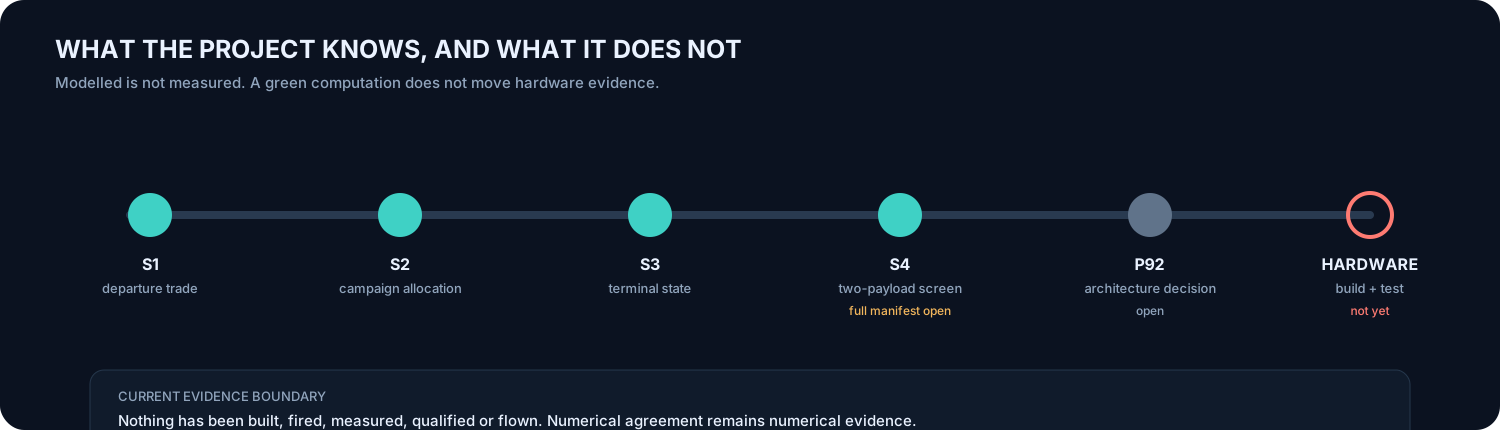
The site can look ambitious. The evidence boundary still has to be obvious.

Evidence maturity map
Two-payload manifest timing comparison
Latest calculations · 16 September 2026

What simultaneous errors and a real force law change.

06 · things that broke

Failure is part of the front page, not buried in an appendix.

Not every defect deserves a billboard. The ones that changed the machine or withdrew a claim do.

Selected findings that changed VOLLEY
07 · current work

The reference now has to survive contact with hardware reality.

first

Try to kill the release cell

Freeze coupon bands for accumulator force-displacement, preload repeatability, latch shock, pusher friction, exit velocity/tip-off and catcher load.

then

Charge the installed burden

Compare independent cells, banks and the shared path using real structure, actuators, controls, energy, envelope and failure consequences.

then

Close P92 or change the machine

Add the missing mission uncertainty and settling physics, then freeze detailed geometry only if the reference survives.

08 · go deeper

The website is now the front door. The engineering record stays underneath it.