concept
Who should own the first few metres per second?
VOLLEY moves one narrow capability boundary: some initial mobility may be supplied by the host-side deployment system instead of being repeated on every spacecraft.
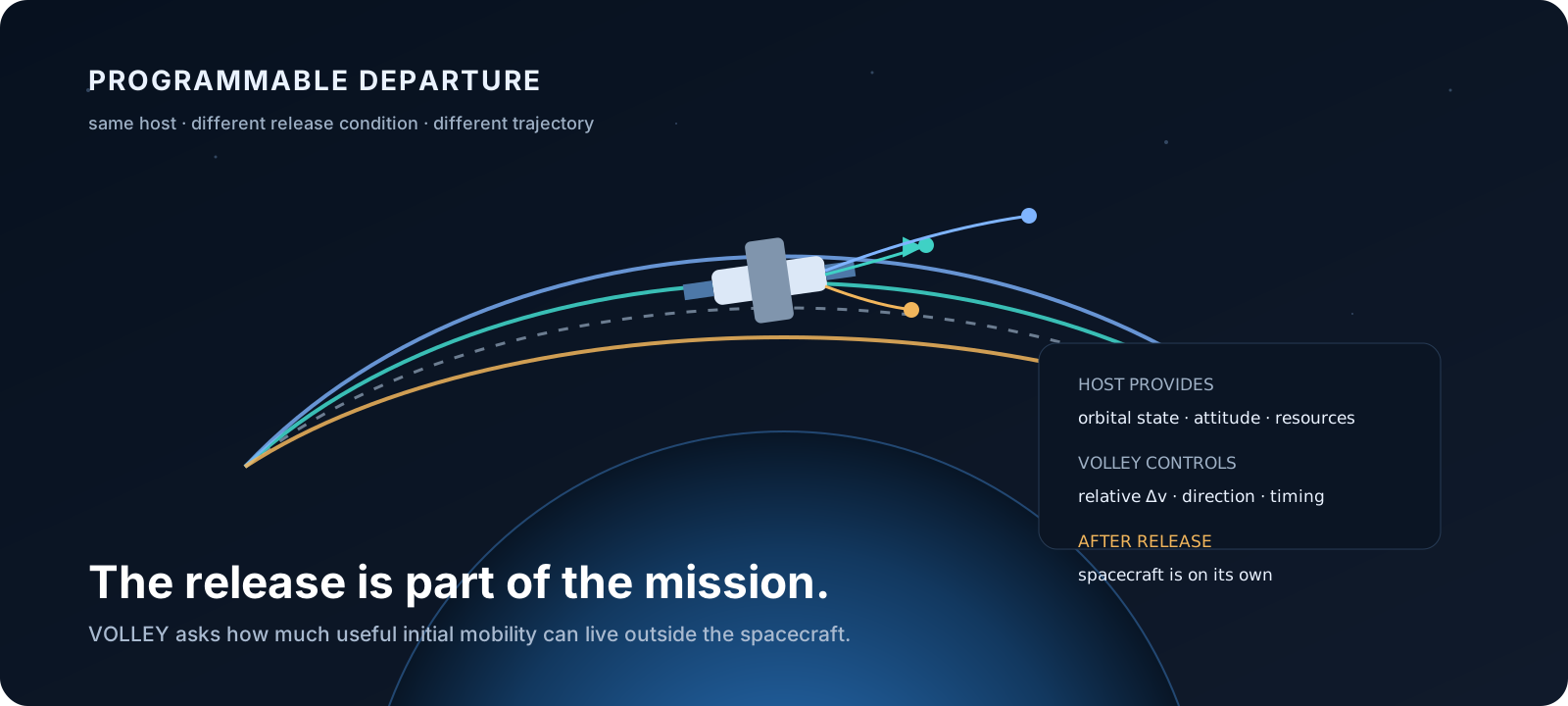
VOLLEY moves one narrow capability boundary: some initial mobility may be supplied by the host-side deployment system instead of being repeated on every spacecraft.
Coarse orbital state, navigation, attitude authority, permitted manoeuvres, campaign resources, recoil recovery and disposal.
Retention, commanded relative release velocity, direction, timing, tip-off and mechanical interface.
Everything after contact ends. VOLLEY does not provide continuing stationkeeping, formation control or collision avoidance.
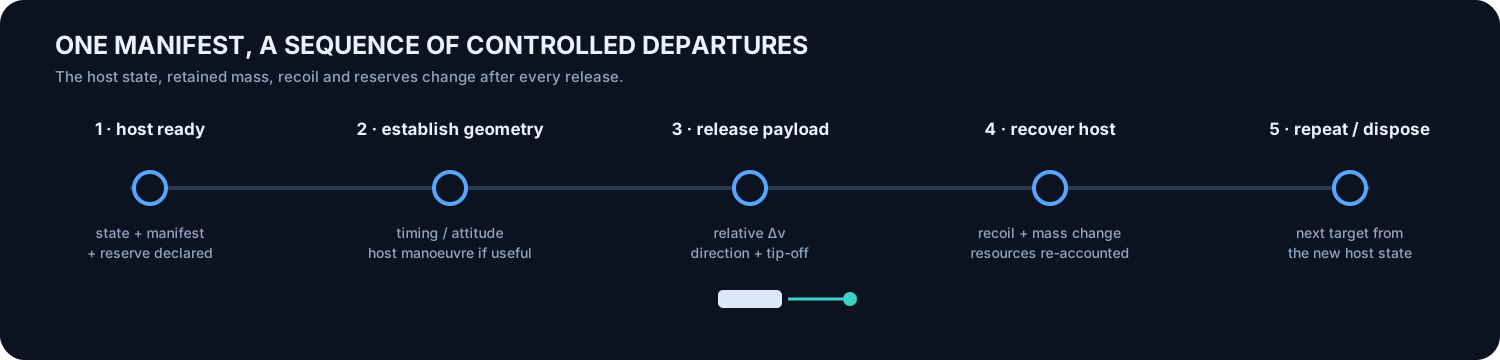
Spent upper stages have already been operated as controlled orbital platforms, and launch vehicles already manage large multi-satellite separation campaigns. Those facts motivate the host boundary; they do not demonstrate compatibility with VOLLEY.
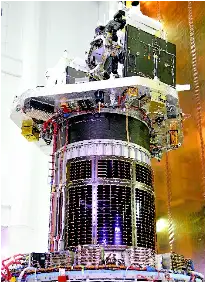
Real upper-stage hardware with payloads assembled. This is host precedent, not a VOLLEY accommodation claim.
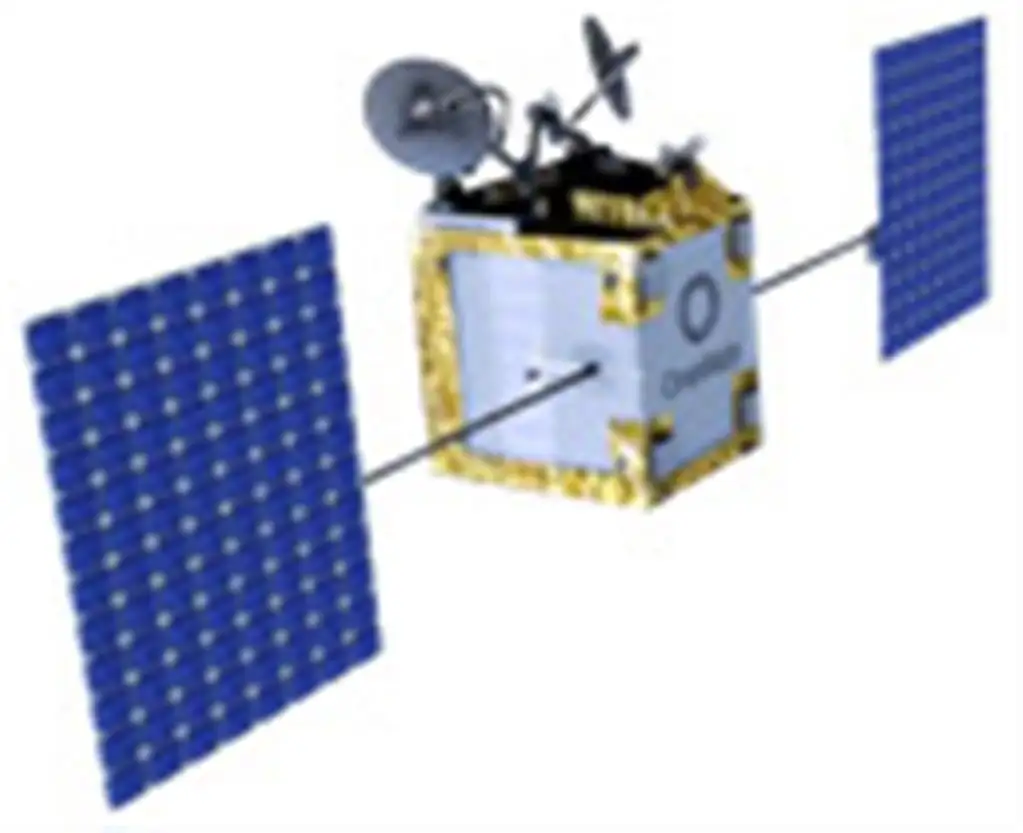
Multi-satellite release, vehicle reorientation and safe separation are already launch-vehicle mission problems. VOLLEY asks whether more departure authority is worth adding.
Release changes velocity at the release position. A propulsion-less payload does not appear in an arbitrary new circular orbit because the deployer supplied extra speed.
Timing, direction, terminal-state error, host manoeuvres and conventional release sequencing can all compete with extra release authority.